Want to learn how to USE AI technology to make money and/or your life easier? Join our FREE AI community here: https://www.skool.com/ai-with-apex/about
Trust in AI Takes Center Stage, From MIT’s Ethics Symposium to Google’s Enterprise Retrieval Push
Two June 5 announcements from academia and industry point to the same shift in AI: the conversation is moving beyond raw model capability and toward trust. One story is about the human systems around AI; the other is about making AI answers more grounded inside the enterprise.
TL;DR
- MIT’s latest ethics symposium framed AI as a technical and human challenge, with sessions on alignment, education, and social responsibility.
- The event highlighted how universities are treating AI governance and oversight as practical, near-term issues.
- Google Research introduced an “agentic RAG” framework for enterprise use on the Gemini Enterprise Agent Platform.
- Google says the system improved factual accuracy by up to 34% over standard RAG and reached 90.1% on a cross-corpus FramesQA setup, with about 3% added latency in the reported test.
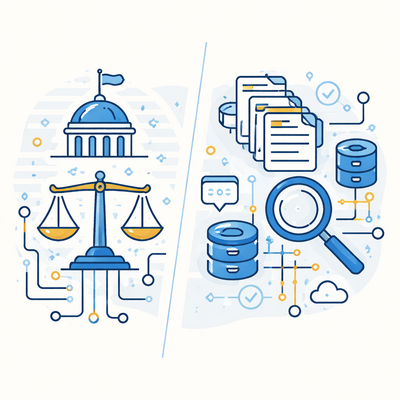
- Taken together, the two stories show that trustworthy AI now depends on both human governance and more dependable system design.
MIT’s Ethics of Computing Symposium puts the human layer back at the center of AI
What happened
MIT News reported on the MIT Ethics of Computing Research Symposium, which brought together researchers and practitioners working across computing, AI, ethics, education, and social impact. The program included talks from Social and Ethical Responsibilities of Computing seed grant recipients, panels on AI alignment and AI in education, poster presentations, and a keynote by Cornell’s Jon Kleinberg.
Why it matters
At a moment when most AI coverage focuses on model performance, MIT’s framing is a reminder that deployment, oversight, and institutional design are now central to the field. As AI systems become more capable, the quality of the human systems around them increasingly shapes whether those systems are useful, safe, and accountable.
Key details
- MIT described the symposium as a forum focused on the ethical and societal effects of computing and AI.
- The event featured interdisciplinary participation rather than limiting the conversation to technical research alone.
- Panels covered AI alignment, showing that alignment is being treated as a live research and governance topic.
- A separate panel focused on AI in education, reflecting growing attention to how generative systems are changing teaching and learning.
- Jon Kleinberg’s keynote addressed algorithm-human handoffs, a practical issue in systems where humans remain responsible for decisions.
Source links
https://news.mit.edu/2026/crucial-human-component-computing-and-ai-0605
Google Research pitches “agentic RAG” as a more dependable way to answer enterprise questions
What happened
Google Research announced a new agentic RAG framework for enterprise environments, developed with Google Cloud and hosted on the Gemini Enterprise Agent Platform. The system is designed for complex, multi-step questions where standard retrieval-augmented generation can struggle to find the right evidence across multiple sources.
Why it matters
Enterprise AI adoption often rises or falls on dependability rather than fluency. Google’s approach suggests that the next competitive layer in enterprise AI is orchestration: planning searches, checking evidence, and deciding whether enough context exists before generating an answer.
Key details
- Google says the framework uses a multi-agent workflow that breaks down questions, plans retrieval, rewrites queries, checks whether enough context has been found, and then generates a response.
- The architecture includes a “sufficient context agent” intended to determine whether enough evidence has been retrieved for an accurate answer.
- Google reports accuracy gains of up to 34% over standard RAG on factuality datasets.
- In the company’s reported cross-corpus FramesQA experiment, the system answered 90.1% of questions correctly while identifying the right source across multiple unrelated corpora.
- Google also says latency remained within about 3% of the single-corpus version in that setup.
- These results are vendor-reported and are best read as evidence of a promising architecture rather than a final answer to enterprise reliability.
Source links
https://research.google/blog/unlocking-dependable-responses-with-gemini-enterprise-agent-platforms-agentic-rag/
https://research.google/blog/towards-a-science-of-scaling-agent-systems-when-and-why-agent-systems-work/
Put together, these two stories describe the same broader transition in AI. Trust is becoming the real frontier: not just whether models can produce answers, but whether institutions can govern them and whether systems can ground those answers in enough evidence to deserve confidence.
---
Want to learn how to USE AI technology to make money and/or your life easier? Join our FREE AI community here: https://www.skool.com/ai-with-apex/about